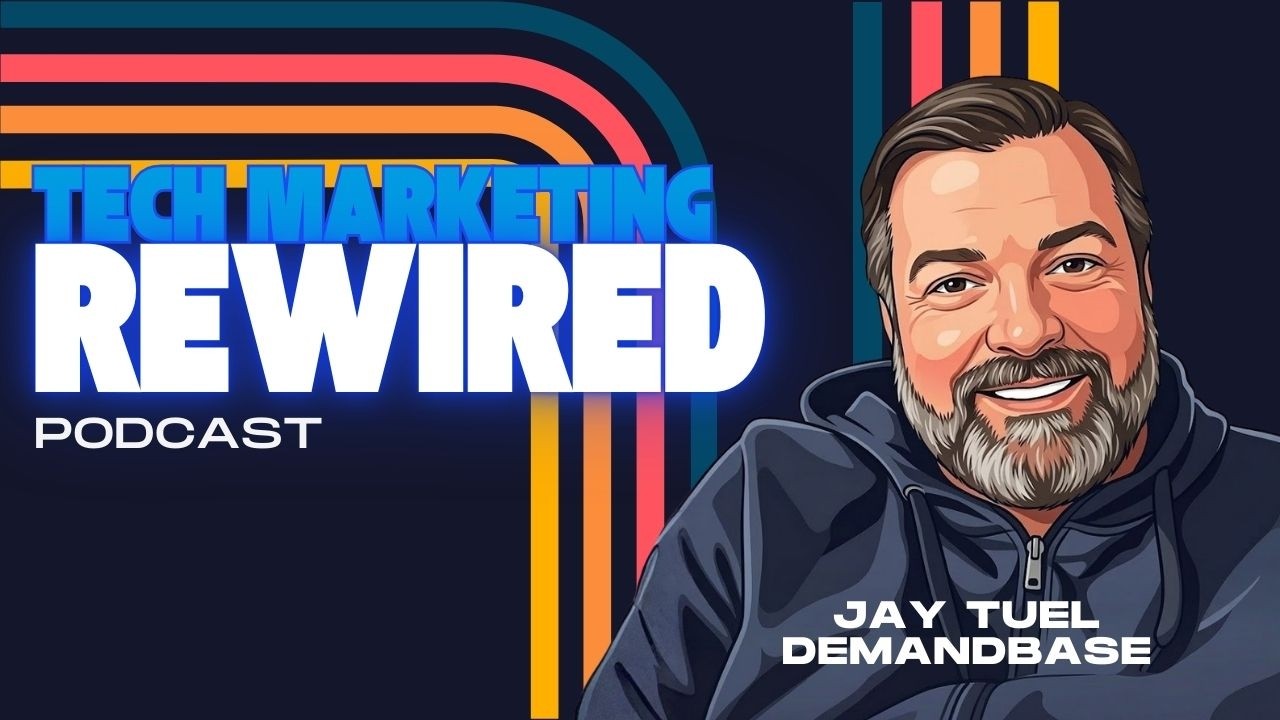
From Signal Madness to Smart Orchestration: Jay Tuel of Demandbase on the Future of Sales
Episode Summary
In this episode, Kevin Kerner sits down with Jay Tuel, Chief Evangelist of Sales at Demandbase, to deconstruct the "signal madness" currently hitting B2B tech. Jay shares the playbook for moving from manual CRM research to AI-driven orchestration that identifies real buying committeeseven when they are 40 people deep.
He reveals how organizations can stop wasting human talent on inbound triage and instead leverage AI to respond with a level of speed and precision that was previously impossible.
Key Takeaways from This Episode
- The Death of Manual Inbound: Jay explains why AI should handle 100% of inbound follow-up, as it provides more timely responses than a human and frees up the team for strategic work.
- Mapping the Modern Buying Group: Discover why the average buying group now ranges from 17 to 40 members and how to use AI to identify high-value individuals with 100% confidence.
- Creative Signal Sourcing: Learn how to look beyond job postings to use 10Ks, investor calls, and even video transcripts as signals to drive deep executive engagement.
- The End of Setup Friction: Jay discusses how AI is removing the administrative burden of MarTech setup by self-optimizing scoring based on real conversion outcomes.
- Inbound-Led Outbound: Understand the strategy of using an initial MQL as a starting point to build around the entire buying group rather than just moving an account into a generic nurture track.
- The "AI Roulette" Wildcard: In a response to an AI-generated question, Jay identifies the sentiment of an executive board meeting as the ultimate "invisible" signal for timing enterprise outreach perfectly.
Listen to the Full Episode
What Resources Were Mentioned in this Podcast?
- Jay Tuel’s LinkedIn: The primary way to connect with Jay and follow his tips on signal-based selling.
- Demandbase: The platform powering the signal and buying group technology discussed throughout the episode.
- 10K Filings and Investor Calls: Mentioned as critical data sources for identifying executive priorities.
- Listen Notes: A tool referenced for finding executive podcast appearances to use as signals.
- Perplexity and Gemini: The AI tools used by Kevin to generate the "AI Roulette" segment.
About Tech Marketing Rewired
Tech Marketing Rewired is hosted by Kevin Kerner, founder of Mighty & True. New episodes feature unfiltered conversations from the frontlines of B2B and tech marketing.
- Subscribe and connect with us at www.mightyandtrue.com.
- Follow Kevin on LinkedIn for more insights.
- Subscribe to Kevin’s Substack for deep-dive articles.
Why Fewer, Better Buying Group Members
Jay Tuel 0:00
You're able to find some pretty cool buying groups. And the thing that I've heard from every seller is I don't want more buying group members. I want I want less high quality buying group members. Don't give me 20. Give me five that you have 100% confidence those are the people. And I think that's that's where this story is going. Like, yes, we need to make buying groups less than the account and make it less targeted. But if we're at an enterprise account, I still don't want a hundred people. I want 20 high-value people that could buy four products.
Sponsor: Mighty And True Overview
Meet Jay And The Signal Obsession
Kevin Kerner 0:35
Hey everyone, this is Kevin Kerner with Tech Marketing Rewired. I just uh wrapped a very fun conversation with Jay Toole, who is the chief evangelist at Demand Base. Uh Jay and I have been around for a while, so we had a lot to talk about. And we were both kind of marketing geeks when it comes to BB marketing and technology and AI and automation and all the things. The conversation was great. We talked a lot about the why we think signals are so hot today, because they really are. Signals in AI and automation seems like these days. And also how people are implementing these signals inside of both their marketing organization, but also the sales organization. Talked about buying group signals, some of the newest technology that's out there, and um what demand-based, at least Jay C's, uh, really successful uh companies doing. So it was a really fun conversation. Jay's a great guy, and I was really happy to have him on the podcast. Before we get into this episode, though, I wanted to just say a quick word about my company, Mighty and True, who sponsors the podcast. Mighty and True is a growth marketing firm that helps with CMOs identify gaps in their strategy. We offer three different parts to our business to help growth consulting, which helps to audit your current marketing programs and systems and identify where AI and automation in our team can help move the needle. We do growth marketing. So we have a, we can take those strategies and actually put them into practice and measure them. And then we have a growing growth systems business where our team can actually build these AI and automation architectures for you, the modern sort of infrastructure that uh technology CMO needs. If you're wondering where your gaps are or you need some help with some specific strategy, we do offer a free 45-minute gap analysis and blueprint session where we'll sit down, talk to you about where the gaps are, where you want to move with both your team and AI and automation, and give you a clear uh structured roadmap to get there. Um, it's gonna be a great conversation. I hope you enjoy it. Let's get to it. This is Tech Marketing Rewired. Jay, welcome to Tech Marketing Rewired. Nice to have you here. Kevin, so good to be here. Thanks for having me. Yeah, let's do this. I was really excited about this one because of the signal madness I will come with.
Jay Tuel 2:50
Really?
Kevin Kerner 2:50
Seriously. Plus, you're a you're a little bit of an OG like me. You've seen you've seen when we didn't have these things or they were really rough.
Jay Tuel 2:56
Oh my goodness. Well, it's funny because everyone's like, if I had these, you know, back in the day. The tough part is there's so much outreach happening. It's it's it's harder today. So a lot of stuff we're talking about, like cool stuff, but you know, there's tactics and strategy that need to be implemented at a much more strategic level. Yeah.
Why Signals And AI Exploded Recently
Kevin Kerner 3:18
Indeed, 100%. Um, so I want to I just kick it off by you know acknowledging that there's so much uh conversation around this stuff. Um, you know, using AI to find the right data points, but also having humans in the driver's seat for the strategy stuff. I'm just excited to hear your perspective, given you've been doing this for a while. What do you think has happened in the last I don't know, year or so that's made this such a thing? I don't remember it being this hot 18 months ago. Yeah. But it's really it's really started to heat up.
Merging First-Party Data With Intent
Jay Tuel 3:49
I mean, I think it's the you know, there's the explosion of of tools that like SaaS tools that are adding AI functionality. There are all of these LLMs getting better and better at what they do and developing integrations into some of these technologies through like you know, MCP integrations. So just the availability of all of this information using AI, using signals together, I think is is really interesting. And we're gonna see more and more of this uh, you know, throughout 2026 and and beyond.
Kevin Kerner 4:27
Yeah, you know what I thought was is cool too, is first party data has always been a signal.
Jay Tuel 4:32
Yeah.
Kevin Kerner 4:33
But the ability to now take that first party data and integrate it with all the crazy signals that are out there now, it's really exciting.
People, Process, And AI Inbound Automation
Jay Tuel 4:41
Right. Well, and there's so much you can be doing with first party data or using some of these AI tools to look into like opportunity level data, right? What were those conversations that were had in that last opportunity? Before people would just be going to, let me see if there's an opportunity record, what was maybe a product that was added to that opportunity. Now we can look at whole conversations with buying groups and pull that into how we need to be messaging them, reverting back to, hey, we spoke with you about this last year. Here's where something is different, where we can help you kind of solve this pain point. I mean, that kind of stuff is so cool to me because that was manual work being done, you know, 30 minutes at an account going back into your CRM. Now it's just at your fingertips.
Kevin Kerner 5:37
Yeah, the automation part is crazy too. Yeah. The tech really has caught up to make it all work. I suppose in from your line of sight, there's a lot of people process technology that needs to change. What have you seen, what have you seen that's been changing organizationally, people skills? Like what needs to change in an organization for them to take advantage of this stuff?
Inbound Leads Fuel Buying Group Outbound
Jay Tuel 6:01
Well, one of the things that I I hear a lot is like our XDR team or our sales team isn't equipped for that. All they can do is like basically follow up on inbound. Why do you need a human to do that? Right? Like basically all they're doing is saying what piece of content or what campaign were they a part of, follow up on you know the top three areas of interest of that campaign and try to get them interested or you know, book next steps. AI can do all that. AI can do all that better because it can do it more timely. Like you do not need a human to be handling kind of inbound alone. Now, where I think human in the loop gets interesting is that initial MQL used to be like, we're gonna work this. And if it's the wrong person or they say no, we're gonna move the account into nurture. It's like, no, you use that MQL as the starting point to build around the buying group, understand what the area of interest is, have the human understand or you know, use AI to identify other people in the buying group, but then build a plan of attack around how are we going to open up a conversation within this account. And signals and AI intelligence is really allowing for more of this strategic work where it's like inbound leading, outbound to buying groups. You kind of need all these things working together to be able to do smarter outbound.
Unusual Signal Sources And LLM Research
Kevin Kerner 7:37
Yeah, I want to ask you, I would pick your brain on the buying group thing. We'll get to that in a bit. I just I want to I technically I want to figure out how that's working. Like how do you get to it? But maybe back up a little and talk about what you see, because you're on the signal side. You've also got an ecosystem that you play within now. So everything, everything's composable. Everything, everything meets each everything else. And then you have mid, you know, middleware systems that make it all work. What do you see that are some of the use cases that have been the most surprising or interesting or innovative for you? For just in general or yeah, just when you're when you're looking at people in terms of how they're using signal automation and connecting these systems, what signals do they use that are that you know, beyond just the normal stuff, let's say uh, you know, new job or you know uh job descriptions or career openings or those type of thing. I was just curious what you see. Yeah, people do not that it's innovative.
Jay Tuel 8:33
I mean, I I love a lot of stuff that people are doing in like, you know, the main LLM tools where you're doing deep dives into like what executive conversations are happening. So like everyone's using 10Ks, but using investor calls, but there's a lot of interesting things that happen there that are very quotable. You know, a bunch of former SDRs who are big-time sales influencers, they were like going in using listen notes to find podcasts of executives and what they were saying, and then being able to apply that to here's what an executive quoted, here's the strategic priorities we were able to pull through AI and then create this like messaging stream, multi-touch messaging stream to address all those points and drive executive engagement. Like that kind of stuff used to take out that would be like half a week of work. And now you can, you know, you can build an agent for that and it's 30 minutes, you know? So it's just it's wild what you can do. I mean, some of the stuff we saw people were doing was like even looking at certain sections of a 10K where there's spend, and that spend could relate to some of like what our products sold and be able to kind of pitch that, but have that that level of intelligence on an account is just it's wild. Yeah.
Turning Exec Voices And 10Ks Into Plays
Kevin Kerner 10:01
Yeah. I watch, I just watched you with and your CEO doing the it's like a little video of you two talking about a topic, and uh all that stuff is up for grabs now. It was on LinkedIn, but any sort of video I hadn't thought of that, any sort of video content that you can scrape is the signal. Right. And yet a lot of CEOs actually speak and do videos and other, you know, people like you, you're out there speaking. Yeah. I hadn't thought of video transcript being this a signal you could get at.
Jay Tuel 10:27
Well, and like some industries are gonna have executives more visible than others. So, you know, there's there's a wealth of this in cybersecurity and tech and stuff like that, maybe not as much in manufacturing, but where you can find those signals and leverage them, if there are any kind of industry-specific publications that are good to pull from, like find what those are and then use those as a guide of kind of trying to find some of those signals along with what signal providers and then your first party data can do, but then blend those all together in a detailed report of to the seller, like this is what we know about the account, and then this is the action to take. I think we can't just be at the level where it's here's all this data. Sales also requires what do I do with it? How do I take action on it? And you can do all of that with AI now.
Orchestrating Ads, Web, SDR, And Gifting
Kevin Kerner 11:21
Yeah. In terms of channels and sort of round trip from the signal, um, of course, you have LinkedIn, you've got a salesperson, you've got air cover, you've got search, you got the web page, you got personalization. I'm really interested in that sort of orchestration of all those things. And I wonder if you could just give your insights on, you know, which of those things still matter now. Like what are the channels you need to be in? I guess it depends on the strategy, but I'm really interested in the air cover piece because, for example, we have an SDR who follows up on signals and she calls people, but we're testing now air cover while the emails and calling happens. And we are seeing an uplift in account activity because of the combination. But I wonder if you're seeing any data that actually shows, okay, when you do these things in this sequence using a signal, you know, it works better.
Jay Tuel 12:13
Well, you know, I think um I think the strategy you outlined is still viable. Like there's this conversation going on is like how LLMs are gonna kill search and what that means to your web traffic and all that. And I and I do think it's a legitimate threat. I don't think I've seen it die this quick death that everyone was saying. So there are still signal like advertising is still a main driver of signals, right? So like you still need to be having advertising at the front of your funnel and and driving people there. I do think you need to be able to understand what people are searching for in LLMs. I think um if you have like a product or a service that can be in a kind of reviews, you know, a G2 or something like that, incredible signal. You have to be pulling that in. Kind of the orchestration across, you know, web personalization to your marketing automation, to uh, you know, like other outreach points, maybe uh a gifting solution, like a sendoso, two STR outreach. You can coordinate all of those things now, and I think I think they're still really important. I think that uh that search one is gonna be the one to to keep an eye on and make sure that you are able to understand where search is happening in LLMs as well, not just, you know, kind of organic search.
Search Isn’t Dead, It’s Evolving
Kevin Kerner 13:49
Yeah, 100%. It'll I wonder if there'll be a feature that comes out at some point where there has to be, right? You can't see you can't see the traffic coming from the LLM yet. You can see it as you know, the bot or eye, but man, it'd be really smart for someone to say, okay, well, this LLM is actually driving this much traffic to you, so you invest more in the I get the reason why they wouldn't want to do that, but I hope it happens some. I think it probably will happen at some point.
Jay Tuel 14:13
Well, and then for anyone who's been using LLMs, you know there's limitations on data that's there, and there's a lot of important data that's you know still sitting behind a form that we'd want to include there. It's getting better at, you know, being able to pull more information, but it still doesn't have access to everything. So I feel like you run into certain walls trying to do things today, but you know, in six months that could all change. It's changing every week already. So we'll see what happens.
Kevin Kerner 14:42
It's really crazy. I just had Tony Tacky on the podcast who runs Global SEO for Procor, and he he had a good take. He said that only one percent of the traffic is coming from the LLMs right now, and so people are redoing their whole sites just for the LLM, but there's only one percent of traffic coming. Yeah, sure. There's been a there's been a downturn because of the um the AEOs, but um the traffic that they are getting back to at least Procor site, and I've heard this from others, it's much more qualified. Like you're you're filtering out all the noise. So by the time the person actually gets to your site, it's more valuable traffic.
Filtering Site Traffic With AI Patterns
Jay Tuel 15:21
I think there's a lot to that, right? Because if I, as a tech buyer, I think about the way that I do my research now, right? Go help me, I go to Chat GPT, go help me find the top five players in this space, right? Like I so I'm doing my Gartner MQ, my Forester Wave, I'm trying to do that research ahead. Because if I go to someone's website and do that, they know I'm I'm interested. Right. But then it's like I'm gonna gather my requirements, understand the players in the space, understand their value prop and what they're solving. And then when I really need to go get in touch with that account or learn more that I can't pull, you know, I'm gonna do that research. So I would say that would make me more qualified, going from educational to eval stage. There is something there. You know, in terms of some of the website traffic signals, I think there's still a lot of noise there because there is so much traffic, helping teams make sense and grouping together patterns of interest, like is an account coming to a certain product page, whether that be case studies on a product, product pages, you know, the different like kind of value use cases pages some websites have and tying that together as a single signal or as an area of interest, I think is an opportunity that AI can solve for. Make it easier for me to pinpoint the area of interest and what I, as the human in the loop, should be saying to this experience.
Kevin Kerner 16:57
Yeah.
Jay Tuel 16:58
Yeah.
Making Signals Actionable For Sales
Kevin Kerner 16:58
Yeah, very, very good. One of the you have all these signals, you know, that we're compiling them, we're using them as marketers. One of the seems like the biggest other consumer is the salesperson. And so you've got a salesperson who now gets these signals. I don't know. I mean, my experience, a lot of salespeople will look at this stuff and go, I know more than these signals that are coming in. What is all this crap that you're sending me? How do you, how do you have you seen any ways, interesting ways that people are avoiding the signal being noise conversation with a sales organization?
Building Internal Champions And Feedback Loops
Jay Tuel 17:30
I mean, I think um when you have, let's say, a team of people that have, I own 10 strategic accounts, I know everything about this account, they are gonna know a lot of the people there and kind of understand the who's who better, better than an AI. I do think it goes back to that product story we're just telling, talking about, though. Are there new kind of levels of interest or potential new buying group members or people who have joined the company recently that they don't know about that we can help inform them on? Like, did you know this? And a lot of times they'll be plugged into you know specific buying roles, but where do specific expansion opportunities lie? And like, how can we potentially help them? Every seller wants to do better white space mapping and be able to pinpoint where the opportunities are. If you've been working the account for five years, you probably have done all that work and outlined it. If you're a rep that just got assigned to this big account, allowing for kind of some of these technologies to do that work, I think, uh is a major time savings. Or when you think about you used to have a sales rep leave a company and that the value of that information just leaving the organization, like that's not a thing anymore, which is which is pretty cool.
Kevin Kerner 18:54
Yeah, and the sign and there's so many more signals now, too. I mean, they're so they can get so nuanced. So it seems like the you know, I've I've had some success in training a salesperson or a couple salespeople to be advocates, and then once they see it and they start hitting it. I think it's also interesting, I've seen some sales organizations that are giving access to some of these signal-based tools to directly to the salespeople. Yeah. So they can run their own very targeted campaigns without even, you know, marketing's involved, but they can run use some of the signals themselves to run campaigns.
Jay Tuel 19:29
Wow. That that's I can you imagine? I want can you imagine what that would do to advertising budgets? Oh my goodness.
Kevin Kerner 19:35
Mostly email. Mostly email.
Jay Tuel 19:41
Yeah. Um no, but I do, I mean, I've seen it, what you mentioned about building that small group of champions that are going to take it to the bigger group. Like I've gone in and I've enabled hundred person teams. And if it's just me there saying this is what you should do, like I can get them clicking around using stuff. But if I have three people on the team that I can say, hey, tell me how you created an opportunity. You've been trying to get an op with that account for a year. You started using these signals, what did it do for you? And then they take it to their team. I mean, that is so much more effective.
Kevin Kerner 20:19
Yeah.
How Buying Group Identification Works
Jay Tuel 20:19
Right. Uh and then the second point on that one was the more they understand what these signals are and can provide feedback to the admin ops or the marketing person in charge saying, this was good, this wasn't, you know, score this one a little higher. And you start refining it and you have that feedback loop to strengthen what your signals are, like that's where you're really starting to fine-tune things and driving real optimization.
Kevin Kerner 20:50
That gets me to think about the I wanted to have this buying group discussion too, because you can't expose, you can't begin exposing the larger buying group and interest in the buying group to a salesperson through the signals that you have, through through the data interrogation that you may be able to get. Talk to me about how that actually works. Because I I sort of get buying group being able to find people that are adjacent to other people in company in a company, but how do you figure out who is actually in the buying committee, the buying group?
Jay Tuel 21:24
Yeah.
Kevin Kerner 21:25
And now I think you told me on our pre-call, it's like up to four, it can be up to 40 people. Some it's a very large number in terms of the number of people that can be in a buying committee.
Demandbase’s Predictive Approach Explained
Key Integrations: MAP, CRM, Reviews, PLG
Jay Tuel 21:33
The the number's crazy, right? I think that the latest Forrester number is like 17 or 18 in a buying group, but like it can go up depending on the size of the account and you know, the product that you're selling to 40 or so. I mean, what we're trying to do is connect like personas with the with the the level of interest. So, like what topics are they showing interest in? One of the The things I like to do is look at at an account over maybe a longer period of time, maybe a year, were there personas and were they looking at a similar topic, right? And then I can say, were there other people looking at that same topic? Here are the two personas that I want to build out and add to my group. So a lot of this, I'm looking first at who were the individuals that we're engaging, what persona did they align to, and then what topic were they interested in, and being able like the topic, you can map it from campaigns, third-party intent, a number of other first-party signals from your website or like, you know, PLG data, all the reviews, all that kind of stuff, and then say this group was interested in this product. This is what we're gonna talk to them about. Make sure we have all of our potential buyers. There's even stuff happening now on third-party signals where you can track kind of third-party keyword intent engagement on the person, and then that's providing another layer of let's connect keyword interest to the persona alongside first party interest. You're able to find some pretty cool buying groups. And the thing that I've heard from every seller is I don't want more buying group members, I want, I want less high-quality buying group members. Don't give me 20. Give me five that you have 100% confidence those are the people. And I think that's that's where this story is going. Like, yes, we need to make buying groups less than the account and make it less targeted. But if we're at an enterprise account, I still don't want a hundred people. I want 20 high-value people that could buy four products, right? Yeah. And I think that's where we're going as an industry and what sellers are really expecting technology to do.
Kevin Kerner 23:57
Yeah, and you couldn't you could you know you may be able to do that before with rules-based engines, but gosh, with AI and automation now. And all the um third-party, first party, you know, signals out there seem to be more likely than ever that that's that's where things are headed. And I know that I think that demand-based has been more on the you've had the buying signals thing for a while. I mean, that's been something you guys have been leading on. Can you tell me how the actual demand-based technology works when it comes to buying signals? It'd be interesting to see how that, how you how the platform actually supports the ideas that we just talked about.
Avoiding Copy-Paste AI Outreach Traps
Jay Tuel 24:34
Yeah, so I mean, we um there's a number of different things we do from the predictive side to say, show me, you know, what historical things look like. What were the collection of activities that converted something to an opportunity? So that's that's very interesting. And then we look at from those activities, what did an individual persona do? Like there's gonna be this huge section of activities, then we pull out the persona and say, what did that persona do from a kind of third-party intent and a first party engagement? What were the collection of those activities that the buying group did? And how can we pull people into that buying group by their title, their their role within the buying group, and then say these people are interesting based on that, and based on the history of opportunities that have converted, like this looks very similar to what other accounts have done, and here are the people that are doing that research.
Kevin Kerner 25:38
Yeah, super cool. Is the um some of those signals you're getting through the demand-based platform and first party data? Um, are there other uh partners that you work with that are critical to sort of feeding the machine to surface these, you know, people that should be in a buying group? Like who are the most important other partners?
Setup Shrinks, Optimization Scales With AI
Jay Tuel 26:01
I mean marketing automation is the biggest is the biggest one because that's where your campaigns are being held. Yeah. CRM is really important because pushing marketing automation data into CRM then allows you to bring it to basically any sales tool that you own. So CRM allows for kind of portability wherever you want. Yeah. I l I love reviews data. I think that is that is super cool. Um you know, some of the the PLG data that people have and being able to convert free users to paid, I mean, there's a lot of noise there, but if you can start filtering it out using buying group data, that that signal is is just wildly important. I think I think some of the old the old school ones are still relevant, but you need to kind of do them in smarter ways. So the job board postings ones, the executive hires, the acquisitions, just know everyone is gonna be hitting people on those. So you got to use them in a smarter way by aligning them to kind of company priorities and not just congrats on the move. Like, yeah, yeah. Like that person got 50 of those. Like that's not that's not an email you want to be sending, you know.
Kevin Kerner 27:21
Yeah, I I I had got two LinkedIn emails like last week. And I didn't and I didn't want to be too savage about it, because I could have been. I I know how hard it is out there. But it was the exact same subject line, exact same text, but from two different people at two at cut different companies. So it was exactly the same language. I was, how does this happen?
The Near Future: AI Handles Inbound
Jay Tuel 27:42
It must be using the exact same It's because of the AI tools, you know? They're they're doing the exact same thing. And like I've had that same thing happen to me too, where the years are exactly the same, word for word. You start realizing phrasing or words that that an AI solution will use that just aren't human. Yeah. The M-dash is my like if you have more than one M-dash in a three-paragraph email, I know it's all AI. Uh even one is is a little sus. Um, but I do think kind of that human loop, human in the loop and bringing making it your own voice. It there's something there where I just I still, when I'm at that mode in the eval process, I do want to talk to a human and not get caught in this loop of AI not being able to answer my questions, you know.
Kevin Kerner 28:37
Yeah. I mean, that's why the human in the loop is really important. And it used to be to set up these tools, you would need like a Martech ops, you know, technologist. And we talked on our little pre-call here about how much I'm doing in Claude Code and how easy it's becoming to be a um, you know, to be be an expert or be able to connect the tools. Maybe not an expert. It's just so much easier to use the stuff. Yeah. Which might actually, it's a good thing, I think, but using it without context is really dangerous. Yeah. You you end up with this type of stuff.
Daily Insights From Conversational Intelligence
Jay Tuel 29:11
I I mean, I think like one of the biggest hindrances to using technologies like this was the setup for like going in and questioning how the scoring was done. And now with AI, it's like do the setup for me based on best practices across thousands of customers. Pull that insight and add it to mine and optimize and continually optimize. And if we can set an outcomes barrier for we expect a conversion rate on an account at this level, and if it dips below the conversion rate, go look at the accounts that were above the conversion rate and make the process or the scoring smarter and continually self-optimize. These tools are going in that direction. So the setup and the admin behind it is almost a non-factor anymore, like that, which used to take a majority of the time, let AI do that, and then have your ops teams and your admin teams doing smarter strategic work that is driving outcomes that your sellers care more about. It actually helps the partnership between ops and marketing and sales. And it just allows for us not wasting time on things that aren't really driving outcomes. Yeah.
Kevin Kerner 30:29
Yeah. You can be so much more creative. It used to be, you remember in the day, it was like you wouldn't want to do something that was that you thought to do because you were worried about what it would take to set it all up. Now it's like the setup part is just not the not even a factor anymore. So it's creativity. If whatever you can think of, you can kind of do. Not everything I think of is a good idea, but you can do you can do so much more. You're not hampered by the APIs and the rules and all those things. It's a great time to be alive.
AI Roulette: The Human Signal We Want
Jay Tuel 31:00
Well, and and you know, I think in the past, it's like I wanted to do more testing of what was working and less on kind of the setup admin. Now that I don't have to do as much of the setup admin, I can do more of the testing and optimizing, and like that's where I want to be working anyway, you know? So I think that's pretty cool.
Kevin Kerner 31:21
That's the magic. Yeah. Okay, so you're uh kind of a futurist kind of guy there at Demand Base. I'm wondering what you're what do you think's coming up next in the category that you're most excited about? Where do you where do you hope that the future uh becomes? I hate to even say a year, maybe in the next six months.
Closing And How To Reach Jay
Jay Tuel 31:38
My gosh. I mean, you know, I well, someone in my role, I hear the death of outbound, the death of SDR all the time, right? So I think we mentioned earlier AI should be handling all inbound. I just don't see a place for that anymore. And if you're not doing that or thinking about it, or you don't have a team with that skill set to do outbound and they can only do inbound, you're spending money in the wrong place. Like you can severely limit your headcount and get AI to do that at 90% of the results, right? Maybe even, maybe even better. You know, I do think the connectivity between these tools and then being able to pull in kind of AI insights and AI provides so much great context, and then signal providers provide interest, combining and having that connecting the dots between kind of, you know, the context and the actual interest, I think is is massive. So it's, you know, the uh integrations, connectivity between all these technologies working together. Some of it'll be consolidation, but really there's gonna be so many data points you can pull in and automate from that it's it's gonna make this really cool.
Kevin Kerner 33:01
Amazing. And it's but even on the LLM side, MCP has been really interesting for me to play around with with the connections in the HubSpot and other things. I think that's a good starter sort of discovery tool for you know, some of the more senior people that I work with, like CMOs and stuff. They love to get into MCP and just like start asking the the uh AI for you know, Python charts and those type of things. There's really great.
Jay Tuel 33:26
And her price sales reps, they see MCP integration, they're like, yes, this is what I've been asking for. That's what they want.
Kevin Kerner 33:32
They want to ask the question.
Jay Tuel 33:33
Yeah. And then, you know, all these automation tools. You saw momentum got acquired by Salesforce this week and all the stuff that Gong's been doing. Like those tools can pull so much information from your conversational intelligence. Yes. And then I think pushing them into area, like this is part of the connectivity, right? Pushing them into areas your team needs to use and access and actually take action on them. I just see that as really next level insights that people are going to be asking for. I need these updated on a daily or weekly basis, where before that might have been maybe a weekly or a monthly thing. I think the timing so that you're always at the front of relevancy and communications instead of waiting for a data refresh, like we shouldn't be waiting on that anymore. It should just be automatically updated with the context you need in the current moment.
Kevin Kerner 34:35
100%. I'm a big proponent of uh meeting insight. Not enough people use meeting insight because that is like the real deal. You're talking to someone about a thing. It's just, it's just, and I love what Gong does in that regard. So cool.
Jay Tuel 34:48
I love what they do as well.
Kevin Kerner 34:50
Okay, real quick, yeah. This has been fascinating. I have one more thing I wanted to do with you. It's called AI Roulette. It's the where I ask the AI to give you a question. It I will caveat this again like I do on everyone. This is the best question you will be asked during this entire session. It's better, much better than I could come up with. So let me I load your profile and what we're going to talk about here into perplexity and uh or Gemini and let me hit send here. Okay. Okay. If you could add one human signal to your dashboard that currently doesn't exist, a human signal, like buyer, buyer is having a stressful Monday or CEO just had a great board meeting, which invisible human factor would you want to track to time your outreach perfectly?
Jay Tuel 35:37
I mean, if you could, if you could give me signals on an executive board meeting that just happened, that's all I want. Like, what? Of course I want that. I do think um some of these, some of these tools that say like this is how you can engage a person based on their personality type, there is something there to like what kind of tone I want to write. But I think um, I mean, I've been a huge fan of what uh Jen Allen Knuth is doing on executive engagement. And all I want to do is figure out what is that exec team prioritizing at this moment? And what how did that board meeting go? If I could get the sentiment of that board meeting and then connect it to the priority, like that's all I need to build enterprise opportunities. There's so much cool stuff there.
Kevin Kerner 36:28
Oh, yeah. And you don't get the board notes until like a month later or whatever. When they, if they're public, you get some insight, but you're not gonna get it. Right.
Jay Tuel 36:37
Like positive board meeting, here were the highlights, or or even if I knew the priorities, it was positive. I could say, hey, you know, heard good things coming out of your your second quarter. Here's here's what we could help with. Any any insight like that would be just crucial. Yeah.
Kevin Kerner 36:54
I'm not saying that's not gonna happen because it could, but it because it really could at some point. Who knows? Cameras, Twitter, well, it could end up on Twitter if it's a like a you know crazy board member. It might go on Twitter.
Jay Tuel 37:06
Well, I wonder if you could do like board, good board meeting, and then for public companies, you could relate it back to kind of the investor call and then try to find the good pull out the good bullet points that were shared in that investor call, and kind of like all you need is a little bit of context to then go infer other things. There's there's some cool stuff you can do there.
Kevin Kerner 37:30
Executive just took the week off or just took vacation right after the board meeting. It's probably a good board meeting. Well, this has been awesome. Uh Jay, this is great, really good stuff. I really appreciate you being on. I know how busy you are and how requested you are for these type of things. So really awesome. Uh, people want to get a hold of you. How should people follow you, get a hold of you, just uh follow what you're doing?
Jay Tuel 37:53
Yeah, I mean, and I'm I'm mostly on on LinkedIn, so come check me out. Jay Tool, Chief Evangelist of Sales at Demand Base. Come connect with me. I'm always sharing my tips and tactics there. I know I got to get a YouTube channel started. I just haven't done that yet. But LinkedIn, best way to get a hold of me. Kevin, it was so nice doing this with you. As you can tell, I nerd out on these kind of topics and get very excited. So yeah, always, always happy to talk signals, buying groups, AI, any of that stuff.
Kevin Kerner 38:21
Yeah, don't get me started on the nerding out. We could go another. How much time do you have? We could get it's a great seeing you, man.
Jay Tuel 38:29
Yeah, nice seeing you.
Kevin Kerner 38:30
Thank you. Thanks.
Guest Bio
Jay Tuel is a seasoned sales leader and a pioneer in the signal-based selling space. Currently serving as the Chief Evangelist of Sales at Demandbase, Jay specializes in the intersection of AI, signal automation, and account-based strategies.
He advocates for a radical shift in sales operations: moving humans out of the "manual labor" of inbound triage and into strategic roles that leverage AI-driven orchestration.
Jay is an expert at using first and third-party data to map complex buying groups, helping teams build smarter, more connected systems that drive real revenue outcomes.
Conversations That Rewire Marketing
Explore more unfiltered insights from the CMOs, founders, and disruptors reshaping how tech brands grow.