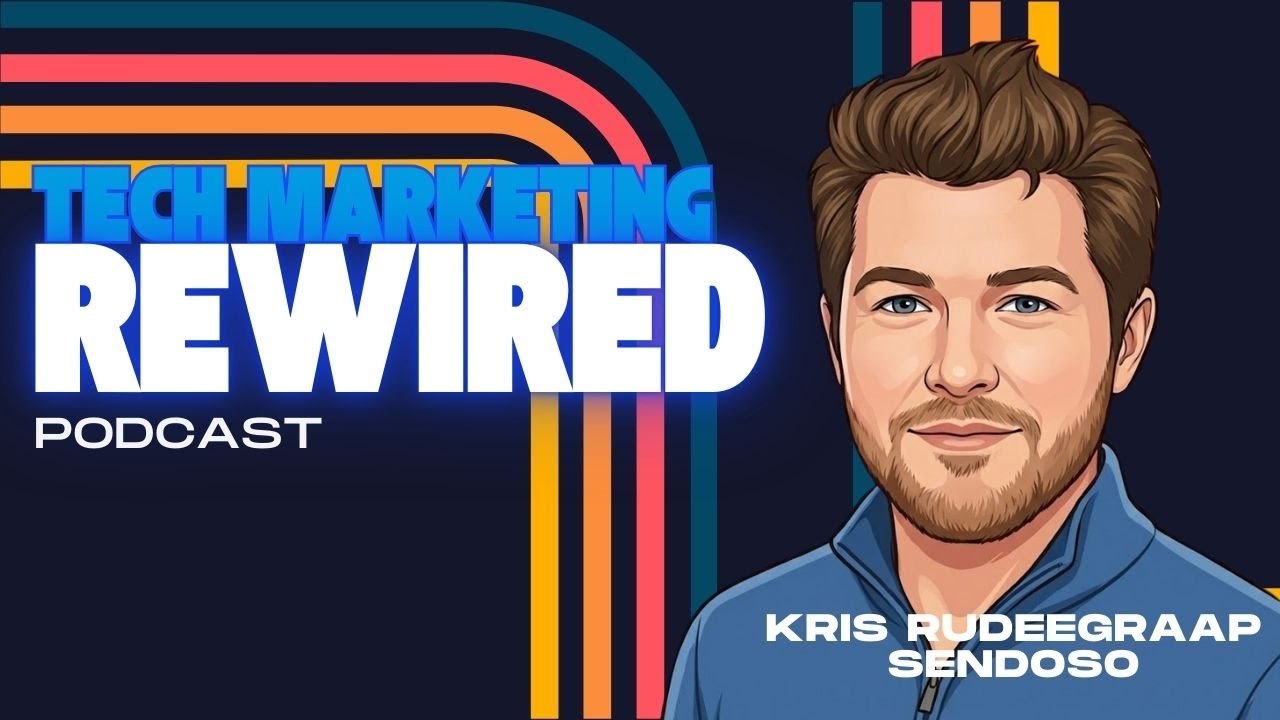
The Human-First GTM: How Kris Rudeegraap is Rewiring Sales & Marketing with Sendoso
- The "Swag Closet" Origin: Kris explains how his days as a Talkdesk AE manually packing boxes in a closet led to the first enterprise-grade "send button".
- Research in Seconds: How Sendoso’s AI Smart Suite transforms 20 minutes of manual prospect research into just 2 seconds of automated, actionable insight.
- The "Give-Get" Strategy: Ditch the "just checking in" email. Learn why sending a lunch e-gift helps move contracts through legal via the power of reciprocity.
- Retention is Personal: High-touch gifting for life moments—like baby onesies or promotions—is a proven engine for NRR and long-term customer success.
- Metrics That Matter: Why the modern CEO focuses on holistic revenue and NRR contribution rather than just top-of-funnel MQLs.
Episode Summary
The Challenge: Breaking the "AI Fatigue" CycleThe 2026 go-to-market landscape is saturated. Digital inboxes are overflowing with "automated garbage," and ad prices are at an all-time high. In this environment, tech companies are finding that more volume often leads to less engagement. Marketers and sellers are stuck in a "spray and pray" cycle that prospects have learned to ignore.
The Strategy: Human-First OrchestrationIn this episode of Tech Marketing Rewired, Kevin Kerner sits down with Kris Rudeegraap, CEO of Sendoso, to discuss why the most effective "rewire" is a return to human connection. Drawing on his experience as a top-performing AE who manually packed boxes in a "swag closet," Kris explains how to use technology to facilitate, rather than replace, real-world interactions.
What You Will Learn:We dive deep into the cross-functional playbooks for Sales, Marketing, and Customer Success. Kris shares how Sendoso uses its own "Smart Suite" to automate the "messy middle" of logistics, why "logo-overload" swag is a thing of the past, and how to use intent signals from tools like Clay and 6sense to trigger physical touchpoints at the exact moment a buyer is ready to engage.
Key Takeaways
1. How do you stand out in an automated world?
It starts by going where your competitors aren't: the physical mailbox. Kris identifies the critical signal as the "diminishing return of the digital-only playbook." If your outreach feels robotic, it will be treated as spam. Moving to a high-touch, human-first model isn't just a tactic—it's a structural necessity to rebuild trust with skeptical buyers.
"I think AI and these AI SDRs have just totally made email a spammy channel... now I think it's like something you fear. Because of the complexity of physical sending, there's still a lot of opportunity to get the attention of your prospects."
2. How do you scale "unscalable" work?
You don't need a manual mailroom; you need a "Smart Suite." Kris explains how AI should be used to handle the operational friction—like finding the right gift, verifying a home office address, and writing a personalized note—so that your sales team can focus on the actual relationship.
"Best sellers were spending 20 minutes researching what to send based on personal data. We were able to build out this AI suite of a 'Smart Send' which suggests the right gift and picks the right address... we shortened that down to seconds."
3. Why is gifting a "Revenue Lever"?
Stop thinking of gifting as "swag" and start thinking of it as a deal accelerator. Whether it’s improving meeting show rates through reciprocity or celebrating a customer’s "life moment" to ensure a renewal, high-touch engagement has a direct, measurable impact on ARR and NRR.
"That just like changes the dynamic of the conversation from 'this sales rep is nagging me' to 'wow, that was thoughtful.' Let me go put some effort in to see where this contract is with our legal team."
4. The "Account-Based Everything" (ABX) Approach
A successful high-touch strategy requires total alignment across Sales and Marketing. Kris advocates for an "integrated" approach where marketing owns the campaign controls and brand approvals, while the reps have the freedom to trigger sends directly from their existing flows in Gong Engage or Salesforce.
"Once we started targeting marketing and then aligning with sales on the end user, that became a really huge boost of momentum... marketing could budget for it and have campaign controls, but then opening it up to the AEs made a lot of sense."
Notable Quotes
- "People buy from people, people renew from people. Customers can't just be transactional; they have to be seen as a person."
- "Logo-overload is dead. A quirky, personalized gift mailer breaks patterns and disrupts the normal 'I got another email' feeling."
- "Data literally does not lie. I like for our marketing team to be creative and gut-driven, but ultimately we are looking at contribution to ARR and NRR."
- "If you're a sales rep and you're not using these high-touch tools when you're given the budget, it’s basically an IQ test you’re failing."
Resources & Links
- Connect with Kris: LinkedIn Profile
- Check out Sendoso: Sendoso.com
- Listen on Spotify: Tech Marketing Rewired on Spotify
- Listen on Apple: Tech Marketing Rewired on Apple Podcasts
- Watch on YouTube: Tech Marketing Rewired Channel
Kris Rudeegraap: 0:00
We see sales use our smart suite more than ever. So, you know, over the last decade, we've accumulated hundreds of millions of data points. And then we really saw about five years ago a push for us into at the time it was more of a data ML strategy, which now is like an AI strategy. But we really saw that a lot of the best sellers were spending, you know, 10, 20 minutes researching what to send to the prospect based on a lot of personal data, researching uh what the right address was, researching the best message to send. And that was spending, you know, maybe 30 minutes per send. And we were able to build out this AI suite of a smart send, which suggests based on a lot of data, uh smart delivery, which picks the right address, smart message, which writes the message. And so we take it shortened that down to like seconds. That used to take 20 minutes. Hey everyone, this is Kevin Ferner, the host of Tech Marketing Rewired.Kevin Kerner: 0:46
This next episode is really great. I got a chance to talk to uh Chris Riedegrupp, who is the CEO of Sendoso. So I don't get a lot of time to talk to CEOs on the podcast. So this was really special for me, not only because he's CEO, but also because he uh Sendoso is a mighty true partner. Uh, we and we really love the work that they do there. So it was kind of fun to talk to him. The one of the reasons I reached out to him was because um I was very interested in how direct mail is evolving in the age of all the automations that are out there and all the all the tools and uh channels, and of course, the cost of channels is going up and the effectiveness is going down. Seems to me like direct mail is the one thing that hasn't really declined over the years. So I was uh very fortunate to get a chance to talk to him, and we had a great conversation about his origin story, best use cases for Sendoso in sales and marketing and customer service. And also I asked him, what's the weirdest gift that he's ever uh seen sent out? So that was really it's been really a lot of fun. Um before I get started, I wanted to mention that this podcast is sponsored by my company, Mighty and True. Mighty and True helps um CMOs identify the gaps that they may be facing in getting their strategic plans to market. And we go ahead and bring those plans to market, and then we also build architect infrastructure that helps them do those, get to those um strategic goals faster and uh more efficiently using AI and automation. The other thing I wanted to mention is that with our partners at Sendosa, we are we are having a tech marketing rewired dinner in Dallas on March 5th. So if you're interested in an invite to the dinner and want to meet me in person and some of the Sendosa folks, along with a number of other CMOs that are in the Dallas area, please reach out, uh connect with me on LinkedIn and or look us up at www.mightyandrue.com. Okay, that's about it. I'm super excited for this conversation. Let's get to it. This is Tech Marketing Rewired. Chris, how are you doing? Welcome to the podcast.
Kris Rudeegraap: 2:45
I'm doing really well. Thanks for having me on, Kevin.
Kevin Kerner: 2:47
Yeah, I was really excited because you could we are a Sendoso partner, so we love your love your stuff. Uh, but you're you guys are doing such cool stuff in the space right now. I had to just get you on to talk all things through. So I want to just dive right into it. Um, I was going to the one of the things I wanted to figure out is how you actually started this thing. I think that'd be interesting to a lot of people. Like, why would someone do this uh at scale? I mean, it's a great product, but how did you come up with the idea? How did you take it from, you know, a garage to the scale that you guys have now? I just think it'd be interesting to hear for starters.
Kris Rudeegraap: 3:21
Yeah, uh, it's definitely interesting to scale up given the physical warehousing, logistics, supply chain components. So uh, you know, I think I like how a lot of good startups uh start, it came out of a problem that I faced firsthand that I was passionate about solving at the time. And so about a decade ago, um, I was in sales myself at a smaller startup in San Francisco, and I had seen that my email response rates were kind of diminishing. People weren't replying. You know, if I look back like 12, 13 years ago, I'd send out like 100 emails and get like 90 replies. It was wild. And I think that was before all the mail merge tools became uh so easy to use. But uh with diminishing email response rates, which was really my lifeblood, I said, what else can I do to grab the attention of prospects, to build better rapport, close meetings, thank prospects? And so I found myself, you know, going to our marketing swag closet and grabbing swag and packing up boxes and shipping it out, or writing handwritten notes, or going down to Starbucks, buying gift cards and sending it out, or even personal stuff like being on a call and seeing uh or hearing a dog bark and sending over a dog toy, or seeing someone's called dog motor that they're talking about and sending over a gift related to that. And so smart. I was running just like a mini mail room. Um, and honestly, it kind of sucked. It was like annoying to pack boxes, run to FedEx, click tracking links. Luckily, I was the best seller, so my VPS sales would always approve these Amazon expense reports. Um, but all of it made me believe that there had to be a better solution than me manually doing this, and asked a bunch of buddies, and they all were like, hey, this is cool. We some people were doing this, some people wish they could do more of it. And so I kind of made the crazy jump to say, okay, I'm gonna solve this problem. And then that's where all of the effort and crazy, you know, uh early years started.
Kevin Kerner: 5:11
It's like, how hard can it be? I've been doing it myself. Like, how hard could this possibly be?
Kris : 5:16
Yeah.
Kevin Kerner: 5:16
But I know it's like operationally having my days at when I was at another marketing services company, Hard Hanks, we did a lot of fulfillment and it is very detailed and glow when you throw the global stuff on top of it, it's just really uh really amazing. But I do think it's held through all the channels that you look at. Like if you look at all the channels that are out there and there's many now, it seems to have held the best. It's like the thing that really it's in fact, it's probably even more relevant now because of all the others' channels. I mean, God forbid someone opens an email now. So it's it's it's a it's a it seems like now is the right is as right time of as any.
Kris Rudeegraap: 5:56
Well, I think you nailed it in that, you know, ironically, 10 years ago, I thought email was on its last leg and fast forward, and I think AI and you know these AI SDRs too have just totally made email a spammy channel that one that people you know try to not read. And I think, you know, a decade ago, even five years ago, people were like excited to check their inbox. And now I think it's like something you fear. So I think you know, crazy inboxes, mix that with rising ad prices on the digital side, mix that with like a gazillion more companies competing for attention. You know, it's it's easier than ever to use some of these like new AI tools like Replit, Lovable, et cetera, to like code and create your own company, and then you got to start marketing it. So you got to start, you know, outbounding and you know, go to market. And then, you know, I think also, you know, I had the luxury a decade ago where everyone was in office for the most part. And so I was packing boxes from a swag closet. Now with work from home, you don't have that like swag closet, you know, next door, or maybe you do in your garage, but that maybe sucks. Um, and then to your point on you know, this channel outlasting or being uh almost less saturated now than ever before, I think that because of the cost components and because of the complexity, operational complexities, if you do this manually, it's kind of uh prevented oversaturation, which is nice because there's still a lot of opportunity to use direct mail and get get the attention of your prospects and customers.
Kevin Kerner: 7:22
Yeah. It was since the spark of the idea was say born from sales hitting quota, did you at that time ever I mean now you're in marketing, you're in customer service, you're in all the things.
Kris Rudeegraap: 7:34
Yeah.
Kevin Kerner: 7:34
But it does it's did it support does it surprise you that this took on such a life beyond just like a salesperson tool?
Kris Rudeegraap: 7:41
It did. And actually, for the first call it like half a year, I actually had some uh OMG moments that this wasn't gonna work because I was reaching out to BPs of sales thinking like, hey, this is a sales tool. Um and it wasn't until a couple of sales leaders were nice enough to say, hey, like the tool, but marketing needs to buy this, they're gonna run this, and then get back to me once it's live and I'll push this to my team. That really changed our kind of our our ICP of who we were going after. And then once we started targeting marketing, uh marketing and then aligning with sales on the end user, that became uh a really huge uh boost of momentum for us because marketing could uh budget for it. They wanted the campaign controls, the tracking, they wanted brand, you know, approvals, etc. But then opening it up to the AEs, the SDRs, the AMs uh made a lot of sense.
Kevin Kerner: 8:32
Yeah, that makes sense. Um uh product market fit, like it comes out of the strangest places sometimes, you know. And you're an entrepreneur, it's like, hey, I didn't see that coming, but yeah, it's good timing. Um okay, I want to get into kind of the playbook for this stuff and maybe we do it kind of cross-functional. Uh, I mean, I'm sure it's all interwoven the sales, marketing, customer support. But since it maybe started with sales, I wonder if you could talk about we're in 2026 now. There's there's likely to be some new things that people are doing with physical gifting. A lot of this may bleed over in our marketing discussion, but from a sales perspective, how is it being used today in the in the best possible ways? And what do you see people doing that they shouldn't be doing in the in the sales function using your technology?
Kris Rudeegraap: 9:21
A lot of different ways sales are using it. Um, you know, I think from the most obvious as, you know, I think in today's day, more sales teams are doing full cycle uh prospecting and closing. So we're seeing that for those teams that are doing that, sales uses this as a great tool to try to break into new accounts and you know, book book more meetings. Um we see sales use our smart suite more than ever. So, you know, over the last decade we've accumulated hundreds of millions of data points. And then we really saw about five years ago a push for us into at the time it was uh more of a data ML uh strategy, which now is like an AI strategy. But we really saw that a lot of the best sellers were spending, you know, 10, 20 minutes uh researching what to send to the prospect based on a lot of personal data, researching uh what the right address was, researching the best message to send. And that was spending, you know, maybe 30 minutes per send. And we were able to build out this AI suite of a smart send, which suggests based on a lot of data, uh smart delivery, which picks the right address, smart message, which writes the message. And so we take it, we we shorten that down to like seconds that used to take 20 minutes. So that's one big thing for sales. We also see sales teams use it kind of throughout like a longer sales cycle, like maybe uh sending a ma uh a gift uh that is an invite to an exec dinner or some kind of dinner. So using it for like grabbing attention for invites, also uh for like thought leadership content or like a new case study, rather than just being like, hey, here's a PDF, it's hey, here's PDF and here's a coffee e-gift to uh enjoy some coffee on me while you read it. We see that being popular. And then no more of the like the hey, happy Friday, checking anywhere that contract. Instead, it's kind of a give get where it's like, hey, happy Friday, you know, grab lunch on me and and let me know where the uh if you need any help on that contract. That just like changes the dynamic of the conversation from like, oh, this sales rep's nagging me to, oh wow, that was thoughtful. Like, let me go put some effort in to see where this is with our legal team. Um and then we see a fair amount of sales teams using it uh for show rates. You know, it's again kind of a uh reciprocity, guilt shipping, hey, you know, looking forward to chatting in an hour or later today, here's something for you. And that improves show rates quite a bit too. So those are kind of the use cases uh we're seeing a lot. And then we are seeing more uh, you know, reps getting uh you know integrating in this into their flows. So while, you know, five years ago, you know, outreach and sales loft were our heavy, uh heaviest integrations on the sales side. Now it's the gong engage tool, it's uh through clay, um, it's through other tools that are now more in the modern sales tech stack.
Kevin Kerner: 12:05
So you had to open up your at some point you had to open up the API to give all these tools access, like a clay and other tools. It's just man, the power of that. Like I use N8N a bunch for all our automations. And I haven't tried it with the Sendoso API yet. I want to do that for some of the mighty and true stuff we're doing, but it's just a game changer because I could trigger off anything.
Kris Rudeegraap: 12:27
It does it's I could trigger off anything. Yeah, we take care of and it's the nice thing is you can trigger it from the existing workflows. You can put in a lot of if-then's into your workflows. Yeah. We were super early on a Zapier integration when that was like the automation of choice, and then have uh moved into making it easier in NAN and Clay and API. But I think that's the name of the game, especially with you know, certain companies maturing into like a go-to market engineering role that wants to automate on behalf of a lot of different uh sellers. Um so yeah, I think it's uh an interesting time. Um, and you know, we've taken all the heavy lifting of the operational complexities to make it a no-brainer to want to trigger off gifts and mailers.
Kevin Kerner: 13:08
I just think it's so smart because when you're one of the questions I had for you was sales adoption. I mean, what does it have to take for I guess the smart I've always said it's like kind of an IQ test. The smartest salespeople will see this and go, oh yeah, I'm gonna do this. Yeah. And they're probably hitting quota. The ones that aren't so smart or just aren't that uh interested, um, aren't really gonna use it. So the how do you get salespeople to actually use the tools that they have available to them? I'm sure that's the frustration of a lot of marketers that own the thing, but they want to get sales to use it and it just didn't get thought of.
Kris Rudeegraap: 13:42
Yeah, no, I agree. There's definitely that dynamic where we I'm like, why the heck if this sales rep is not using it, even though they're getting 500 bucks for marketing a month to spend, it's insane not to. I think there's just some sellers that are stuck in their old ways. Uh, but we do see marketers running contests, giving extra spend to to you uh to uh reps that are spending more, sharing internal wins, like a lot of customers have Slack channels where they're like, hey, I just booked a meeting off this gift, or hey, I just closed this deal and I sent them these two gifts. So I think some of those things are definitely making it easier. And then we do have some features again, like send on behalf of. So again, where you just have marketers that know it works, uh and sellers that are resistant to change. We do see some uh companies uh sending on behalf of the sellers through our platform, and then the sellers are just getting the notifications that it was delivered to follow up.
Kevin Kerner: 14:36
Yeah, that's great. That's a great idea. Um have you thought of because I'm doing a lot of triggering now out of Slack and um and through MCP, through chat? Yep. Seems like giving giving the um and salesperson the easiest possible, like low friction way to do something. That can happen inside of Salesforce, but they don't like to go inside of Salesforce. Have you given any thought to other integrations that might make it super easy, like a like a Slack trigger or a yeah, we do have we do have uh some Slack functionality, especially around notifications and follow-ups.
Kris : 15:10
Yeah, yeah.
Kris Rudeegraap: 15:11
Um, we um are rolling out an MCP server soon. Um that'll also be critical for some of our integrations into tools like qualified and other kind of agent first tools where they want to integrate into us, and an MCP is the easiest way. Um so yeah, definitely thinking through ways like that. You know, there is a few more complexities with us because of the dynamic of wanting to pick the gift and visually wanting to see things and you know, a mailing address, et cetera, et cetera. But um, you know, our goal is how do we make this, you know, as easy as possible is like sending an email. I mean, we even have an email integration where you can click a button inside of Gmail and it pops up uh the ability to send something. So yeah, that's it.
Kevin Kerner: 15:51
Reduce the friction, right? Just get it as get it.
Kris Rudeegraap: 15:55
You can uh generate these what we call party links and give these to the sellers as well. And then you can either a gate them based on like CRM data, so you know, uh, or you can have a uh approval cue thereafter. So there's a bunch of rules and settings, but then it's as easy as just saying, hey rep, whenever you want to send this gift, here's a link, just like you know, chat it, you know, email it, whatever you want to do.
Kevin Kerner: 16:17
Who uh when this when there's a sales relationship, who typically owns the the relationship with you guys in say is there is that usually still done in marketing or is it a sales person like a CMO? Who do I give this to to or a CRO? Yeah. Who would run this for me?
Kris Rudeegraap: 16:32
They're sales enablement, sales ops. Sometimes sales ops doesn't the enablement, so that's typical. Um in some cases, uh it is still like field marketing uh that sits with sales. Some sales teams have like chief of staffs um that uh assist in like tech rollouts like us. Um and in some cases it's just uh like uh more of a mid-level uh sales manager or leader that sees this and wants to own it. Um that's helpful. Makes sense.
Kevin Kerner: 17:00
Okay, well let's move on to uh the marketing side of things. Um I think when you think and I think of marketing, I think of messaging and brand and making sure they were high touch. I well, I had Katie, I had Katie on while uh from one of the first podcasts, the whole human-centric marketing thing she talked about, but it's which I think is really smart. So high touch, but then you have this sort of creepy, cheesy factor, like how do you where have you seen it work really well? Where fits a brand and and where do you want to stay out of the ditches with this type of stuff?
Kris Rudeegraap: 17:35
Yeah, there's definitely brand controls that we have in the platform that we suggest our customers think about, which is like uh whether that's spend controls, logo, um, other permissioning controls. So we think there's definitely a layer of controls and uh reporting that's necessary, especially in certain regulated industries. But on the cheesy point, um, depending on who you sell into, you know, a quirky, cheesy gift mailer actually breaks patterns and disrupts the normal, like, oh, I got another email. And I think that, you know, uh depending on who you sell into, you gotta like, you know, again, be a little unique and say, hey, actually, let's be a little controversial. Let's be a little weird, you know, with this mailer we're doing. And uh at the end of the day, hopefully it makes the other makes the recipient smile and be like, hey, this is this got my attention.
Kevin Kerner: 18:27
So I'm really glad you said that because we we have the customer not to be named uh was doing some really uh kind of really interesting things, let's say, using direct mail. And they were working great. It was just like knocked it out of the park, and then they rebranded some new brand leadership, and they don't do quite as much. Uh, you know, how has to be kind of in the in the pocket, and it just hasn't worked as well. And and and also the marketing team isn't quite as excited about some of the stuff. So it's it's it's um it's it's just like anything, you know, it's it's pattern interrupt. You gotta interrupt the pattern.
Kris : 19:03
Yeah.
Kevin Kerner: 19:03
Yeah. This is yeah. Um is there any way that your the marketing teams are using AI now, either outside the platform or in the platform that helps? You mentioned a lot of the stuff through sales, but are there any marketing use cases for the AI?
Kris Rudeegraap: 19:19
Yeah, I mean, besides those same smart signals or smart uh, you know, smart send, smart uh messaging, smart all those things marketing will take advantage of to automate too. So I think that's critical. But they're also able to act uh in more real time too, where you see marketers using, you know, other signal-based tools, whether it's like the clays, common rooms, or signals from like six sense demand base, et cetera, um, and triggering off of those. Uh and so I think that's really interesting. Um, as well as just setting up automations, you know. I think uh we have a for a lot of people think uh about Sindoso as like a click and send tool, but we do have a full-blown automation system set up in our platform that takes into account data from other systems and triggers. And I think that's also more heavily used by marketing.
Kevin Kerner: 20:06
Yeah, that's cool. Yeah, the clay side, the clay's really blowing up in terms of their people who know that it's round. And the say how they've come how they've uh integrated all the signals into that one platform is is like nothing I've ever seen. There have been other signals, you know. Yeah in Apollo or you know, Zoom has some, and then of course Sixth Sense has their more um inbound, sort of media-centric signals, but man, they really so that seems like a big integration component in addition to the you know outbound side of uh map and CRM. Your dog is gonna be the first dog that's ever been on this podcast. Yeah, I was just gonna say that I can uh no, it doesn't bother me at all. I have a bunch of kids. I'm hoping one of my kids doesn't walk by uh and have you know right with no clothes on or something. So it could get a lot worse. Uh okay, so um other use cases for physical gifting the beyond sales and marketing. What are give me some ideas on how you can use this beyond the typical?
Kris Rudeegraap: 21:10
We're seeing over the last couple of years, especially an uptick on the CX side, customer success, account management side. Um, and I think it goes back to you know, a lot of companies are realizing that it, you know, the the the age old, hey, it costs like whatever five times more to get a new customer than to keep an old one. And so how do you invest in your customers and that in your customer retention and customer success? And gifting is one great way to do that. Um also I think there's a big push for land and expand, especially in these larger enterprises that have done a lot of MA in over the years. I think you think about like the Cisco's and Palo Alto Networks, and those companies have like 20 plus product lines, maybe more, Salesforce, you know, as well, um, where they've got to cross sell, cross sell, cross sell. And because of that, they're having to break into new teams or break in uh offer new teams. New reasons to meet. And so we see a lot of cross-cell expansion being a use case for using our platform for account management teams. And then I think that people are like kind of like reinventing the buyer's journey, you know, and and and doing so as a way to differentiate themselves. Um and because of that, even bringing in life moments. We've seen some companies like uh send out like what baby onesies with their logo on it or a catchy phrase or other things, being ready to send flowers uh if it's someone's birthday or cake or champagne if there's a promotion. So those types of things I think bode well. They're a little bit harder to track, but I think that a lot of smart, you know, chief customer officers are realizing that you know, customers can't just be transactional and can't just be a logo, but it's a person and people buy from people and people renew from people.
Kevin Kerner: 22:53
So yeah, yeah, 100%. Yeah. Uh you know, it with all these features and changes, yeah. And um, you know, you've got all this, you've got all of these things that connect. You're creating, let's say you do MCP and you're doing all the other things. There's so many new gifts and stuff. Yeah. What comes to mind is like, how do you communicate all this possibility and capability to your customers? Like, how do you keep how uh uh talk to me a little bit about how you get this out to people such that they I mean because it's really easy to understand. I send you a gift, you're like, but how do you cover the marketplace in a noisy marketplace with all the things that you guys are doing?
Kris Rudeegraap: 23:31
It's a great question. I mean, it's a challenge that our product marketing team and our customer education team think about all the time. Um, some of the ways we've we've tackled it um is through uh like our Suggestion University that has a lot of really interesting training courses. Uh, we do these certifications based on the end user type, whether you're a field marketer or a sales rep or a demand gen marketer. We have different certifications, and also part of that, there's different product functionality. Uh we also try to connect our community too. So we have uh the ability to like connect customers with other customers, and a lot of times they're sharing best practices or features that they might be using that others aren't. Um, so those are really helpful. We also try to empower our kind of partner community, whether that's agents, uh agencies or integration partners with uh content, and then you know, whether that's more thought leadership that we do as well. But it's definitely a challenge. Um, we are coming out with uh a new like newspaper mailer uh that we're gonna be sending out quarterly. Oh, yeah. Uh you know, using our own product to send it out. But um, you know, as in addition to like our monthly newsletter that's digital and email-based, we're gonna come out with a printed format that should be fun as well.
Kevin Kerner: 24:48
Ah, that's so smart. That's cool. That's a really cool idea. Um, is there anything that you've done, like that since things have changed so much? Is there anything that you used to do that you're not doing you don't do as much anymore because it just doesn't seem to be working from your go-to-market motion?
Kris Rudeegraap: 25:03
Um yeah, I mean, I think we reinvented our cold outbound strategy. So that was like night and day from even as short as three years ago. Um, some of our PPC has also changed a bit. That strategy has changed from a more, you know, broad top of funnel to more of an ABM tactic in terms of uh because it was just wasn't working and be was getting expensive. Um and then I, you know, we were investing a lot in our tech integration partners. Um, and I think that uh though it just got noisy, and a lot of the tech integration partners have a million partners, and so we've pulled back a little bit on the tech partners and tried to refocus more on agency partners, and we've seen uh better success with that. Um and then I think there's other channels that have evolved, like you know, I'd say like our old content uh SEO strategy has evolved and trying to figure out how do we appease like the LLM SEO new playbook. So I think that's changed quite a bit. Um and then there's you know just new things we're doubling down on, I think that's working better uh than it has in the past. Like events, for example, has worked better. Um even our kind of ABM strategy. And I think even trying to test new ad channels. Like we we know we need to send in ads, we can't do the same PPC ads as we did before, but we're even testing like sponsored newsletters, B2B influencers, sponsored uh podcasts, things like that, where you know, maybe the channels where people are willing to, you know, uh tune in or grab attention has changed from maybe like an ad word.
Kevin Kerner: 26:41
Yeah. What do what do you would you say from for your company the top performers are? Like what do you really wouldn't ever stop? Like what's double down sort of stuff?
Kris Rudeegraap: 26:50
Yeah. I mean, drinking our own champagne with direct mail is an obvious one. And I think uh that speaks for itself. Um events, I think events is something that works really, really good. Um and then I don't know, third one on that list, maybe ABM, um, as a general tactic of just really targeting the right companies that we know should be using us um and swarming them.
Kevin Kerner: 27:13
Yeah. Um, so you're the CEO of the company.
Kris Rudeegraap: 27:16
Yeah.
Kevin Kerner: 27:17
And I talk to a lot of CMOs that have to defend you know the stuff they're doing up to the CEO. You're a very savvy uh CEO because you have a sales background and you know marketing. When you when a CMO comes to you or one of the marketing team comes to you, what are the what are the things you like to see as the CEO in terms of marketing performance? Just just like what do you what do you not want to see and what do you what do you want to see? Because I don't get a lot of chances to have CEOs on the podcast.
Kris Rudeegraap: 27:43
This is interesting. I love seeing how marketing turns into revenue. So uh I'll bite they do you know uh report on leads MQLs. Um I've really uh uh trained our marketing team to think in holistic revenue and in contribution to you know ARR and then also uh contribution to NRR. So I think for a while marketing was uh overly focused on top of funnel, and so really trying to get them focused on uh you know reporting on influence of expansion and renewal deals. Um so that was critical. Um I like for them to showcase new channels they're testing and how they're performing and which ones they're doubling down on are killing. Um so I like some per channel. Um there's definitely the like what are we doing for Sindoso and and show me more that I love there uh that they're they're showing to me. Um I also like to see what we're doing in terms of what I'd call just like brand that's not as trackable. Um so whether it's community-related initiatives, whether it's certain events that we are uh not perfectly attributing back, but I like them to purposefully not be too obsessed with numbers where they forget that, like, hey, you know, uh certain channels are bring driving demand and awareness that then turn into inbound, but you can't just focus on dollar for dollar kind of outbound or channels that have a definitive direct impact.
Kevin Kerner: 29:16
Oh yeah, that's great to hear. That's really good to hear. I think it's smart. Do you even care? Do you care? How much do you care about attribution? Like you just you kind of got to that, but is it something you want to see?
Kris Rudeegraap: 29:27
You know, in B2B, attribution is tough. Um so we there's some newer tools that we're using that use AI to bring in more true attribution. Um, because I think there's just been you know a lot of hearsay of like last touch, just like you just can't use that or first touch. So then you get into weighted uh attribution models, and then you know, uh we're testing some newer tools too that are bringing us some interesting insights of like this actually triggered the deal of close. Um, but it also had these other touch points. So I like thinking about attribution, um, but I don't like only using attribution as uh the reporting mechanism. So there has to be marketing still has to be a bit creative and a bit gut dri uh gut driven in terms of uh testing and and proving what works.
Kevin Kerner: 30:17
Yeah. I'm glad to hear you say that because I there well I've been on calls with some CMOs with the with the CEO where they're trying to fend things, and it gets down to the like literally this channel and or maybe this set of ads this month is not driving, you know, X and pipeline, and so we're gonna cut it off. But it's B2B is so complicated. You just can't, there's just so many ways I find brands. You know, I'm all over the place. And so then now you have A AI doing a heavy lift there too. So um, what is my final question? Then I got to get into AI roulette here. Is that what's the craziest gift you've ever seen uh sent out in all of these years? I can't even you may have said it as a salesperson, but what's the craziest thing that someone's done?
Kris Rudeegraap: 31:00
Gosh, there's been infinitely cool uh sends. I think uh, you know, probably some of the most expensive ones was you know, someone was sending out like Rolexes to our platform. Oh there was people sending these Traeger barbecues, which is like uh really cool send. But I think the cool ones are the ones that are actually super personalized that hit home. Like one funny one that our team sent out years ago was uh meeting a VP at a conference uh that was on crutches and mentioned it that they had uh broken their ribs in a skiing accident. And so we uh sent them uh a rack of Kansas City barbecue ribs in the mail when they got home. Um just kind of a funny way to do it. So I think some of those funny, you know, personalized make you laugh and chuckle uh mailers um can outbeat the Rolexes in terms of impact.
Kevin Kerner: 31:48
Yeah, that's great advice. Yeah, I love that. I love that type stuff. Yeah. Um, okay, so I do one final question that I click on Gemini for, and I basically loaded your name in and a little bit about your background through your LinkedIn profile and then the stuff we were talking about today. So I'm gonna hit send and it'll give us a question that the AI wants to ask you here. So let me do that real quick. And okay, here we go. Okay. Uh as a digital entity who is essentially the mass blast spam you fought for years. Oh, that's harsh. I'm worried I'm actually as oh, they're talking about themselves. As the as a digital entity who's essentially the mass blast spam you fought for years, I'm worried I'm actually the problem you're trying to solve. What was the most robotic sales habit you had to painfully unlearn to ensure you didn't end up as predictable, as soulless as my own algorithms?
Kris Rudeegraap: 32:44
Interesting. Um well, um, you know, I do think email is was our enemy for a while. Um in blasting uh was the enemy. Um you know, I think that uh the probably the biggest thing to unlearn was uh kind of our transition to clay and automating uh more of the outbound, which felt like, oh wow, we're gonna double down on spam, but instead it's actually the opposite. In which we've done is we've been able to use AI to double down on better targeting, which is the right prospect email at this right time based on a bunch more data. You know, instead of an insert variable spam email, it was hey, rewrite a perfect sentence for each contact based on these like six prompts and hyperpersonalize every single email. Um and so I think that what originally three years ago was like, okay, we're gonna use AI, and there was a lot of hesitation from the uh outbound team that was, okay, now we're just gonna spam more people, but it's like, no, now we're going to better email the right person. And so I think we had to move away from that mindset um and that uh open up a lot of new doors.
Kevin Kerner: 34:01
Yeah, that is that is exactly the right way to think about it. Because and you it could become unit is unmanageable now. Like I'm sure in my email during this conversation, I've had like probably 10 emails from they're obviously AI generated, but if you do it right and you target right, yeah, it's yeah, it's it's it's a totally different way to think about it. So thanks for putting up with the AI roulette question. Um Chris, I'm I'm a big fan. I want to mention that um Mighty and True and Sendoso are doing a CMO dinner again. We did one in Austin and we're doing one in Dallas on uh March 5th. So I wanted to put a shout out. You guys have been kind enough to to be sponsors twice in a row. And it's just great. We have such a great relationship. So I really appreciate you. And I if you can make it to the if you're in Dallas, you're invited for sure.
Kris Rudeegraap: 34:46
I appreciate it, Kevin. Yeah, happy to support uh the audience and love uh collaborating.
Kevin Kerner: 34:52
Yeah, for sure. So um everyone, I encourage you to follow Chris. Um go to sendoso uh.com and check out what they do as well as all their partners and all the integrations. It's just hard to keep up with. It's crazy. Um, Chris, any other other things that are going on at Sendoso you want to mention before we before we wrap up?
Kris Rudeegraap: 35:10
Um no, I mean we we're constantly doing events, so join us in an event and then love connecting with people. So feel free to add me on LinkedIn, shoot me a note, Chris at sendosa.com with K K R I S. Um, and and love chatting with people that are passionate about go to market. Cool. Good to see you, Chris. Hope to talk to you again soon. Thanks, Gavin.
Kevin Kerner: 35:30
See ya.
Guest Bio
Kris RudeegraapChief Executive Officer, Sendoso
Kris Rudeegraap is the CEO and Co-Founder of Sendoso, the world's leading sending platform. A former AE who realized the limitations of digital-only outbound, Kris built Sendoso to help companies humanize their GTM at scale.
Under his leadership, Sendoso has grown into a global logistics and sending platform that manages hundreds of millions of data points to facilitate meaningful human connection. He is an expert in brand transformation and high-touch engagement, known for helping technical companies strip away "robotic" habits to build authentic, revenue-driving relationships.
Connect with him on LinkedIn.
Conversations That Rewire Marketing
Explore more unfiltered insights from the CMOs, founders, and disruptors reshaping how tech brands grow.

%20-%20Web%20Tiles%20Small%20(616%20x%20308%20px).jpg)